Why I Stopped Dreading the Summer Electric Bill
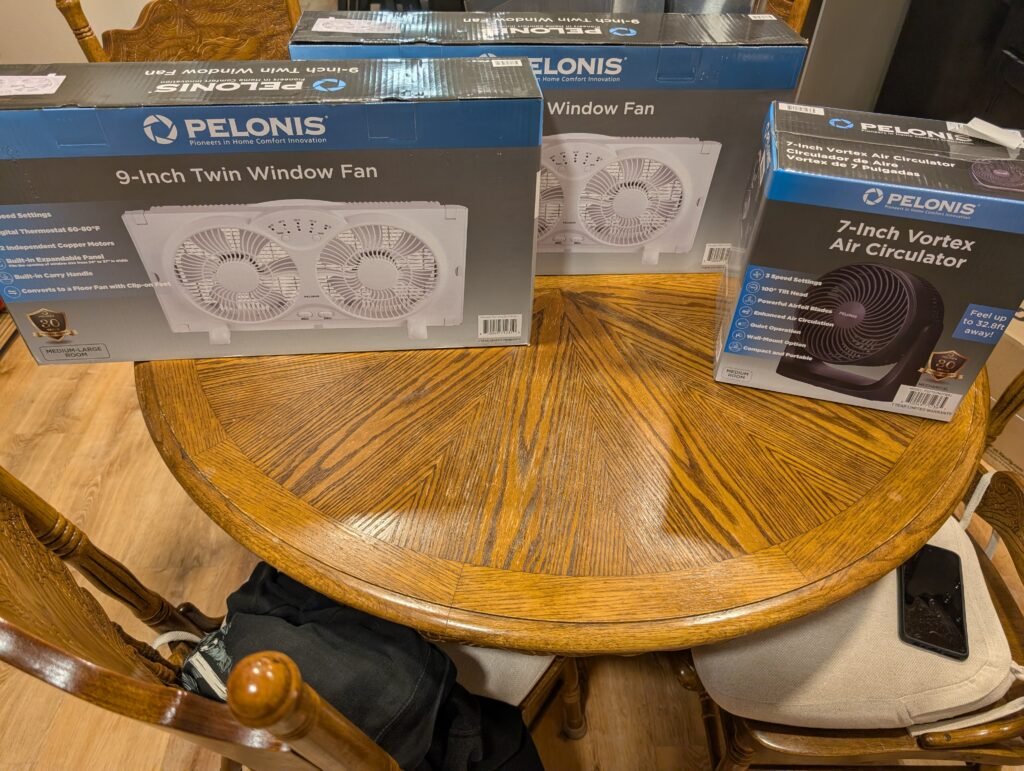
Every June, I used to brace myself. Four boys, a two-story house in Connecticut, and a central AC system that runs like it’s being paid by the hour. Last summer I started researching smarter ways to move air through our home without leaning so hard on the thermostat, and that research led me to a simple but surprisingly effective setup: two Pelonis 9-Inch Twin Window Fans and one Pelonis 7-Inch Vortex Air Circulator. They’re all still sitting in their boxes on the kitchen table as I write this, which tells you I bought them just recently — but I’ve already got a clear plan for how they’re going in, and I want to walk you through the strategy so you can do the same thing in your own home.
The goal isn’t to replace air conditioning entirely. On the hottest and most humid Connecticut days, the AC is going to run. But there’s a solid window of time — especially in late spring, early summer mornings, and evenings — when smart fan placement can keep your home genuinely comfortable without touching the thermostat at all. That’s real money back in your pocket, and in a house with four growing boys who eat like they’re training for the Olympics, every dollar counts.
Understanding Intake vs. Exhaust: The Foundation of Natural Ventilation
Before you plug in a single fan, you need to think about airflow direction. This is the piece most people skip, and it’s why their fans feel like they’re just moving hot air around. Natural ventilation works by creating a pressure difference — you pull cool air in from one side of the house and push hot air out from the other.
The general rule is this: place intake fans on the shaded, cooler side of your home (typically the north or east side in the morning) and exhaust fans on the side facing the sun or the hottest part of the house. In our case, I’m setting up one Twin Window Fan on the north-facing bedroom window in exhaust mode — blowing air out — and the second Twin Window Fan on the lower level facing east as an intake, drawing in the cooler morning air. This creates a natural cross-breeze that pulls fresh air through the house on a diagonal path, which is actually more effective than a straight in-and-out line.
The Pelonis Twin Window Fans are great for this because each unit has two independently controlled fan blades. You can set one blade to intake and one to exhaust in the same window, which gives you flexibility when you don’t have a perfectly matched pair of windows to work with. On mornings when the air outside is noticeably cooler than inside — which in Connecticut happens reliably from May through mid-June — this setup alone makes a real difference.
Where the Vortex Circulator Changes Everything
Here’s where the Pelonis 7-Inch Vortex Air Circulator earns its place. Window fans move air in and out, but they don’t necessarily distribute that air evenly through your living space. A vortex circulator is designed to project a focused column of air much farther than a standard fan — we’re talking airflow that reaches across a room rather than just a few feet in front of the unit.
My plan is to place the Vortex Circulator in our main living area, positioned to pull the cool incoming air from the intake window and drive it deeper into the center of the house. Think of it like a relay — the window fan gets the air inside, and the circulator carries it the rest of the way. Placed low and angled slightly upward, it also helps push the warmer air that naturally rises toward the ceiling back down and out toward the exhaust window. That circulation loop is what keeps a room from developing that stagnant, sticky feeling even when it’s warm outside.
For families with a two-story home, the circulator is especially useful at the base of the stairs. Hot air rises, and your upstairs is almost always warmer. Pointing the vortex fan up the stairwell helps drive that warm air toward upper exhaust windows and pulls cooler air up behind it. My older boys sleep upstairs, and this is the part of the setup I’m most looking forward to testing with them.
Practical Tips for Getting the Most Out of This Setup
A few things I’ve learned from research and from talking to other homeowners about natural ventilation:
Timing matters as much as placement. Run your intake fans during the coolest parts of the day — early morning and after sunset. Close the windows and shut the fans off once the outside temperature climbs above your indoor temperature. You’re essentially charging your house with cool air like a battery, then sealing it in.
Pair your fan strategy with window coverings. Blackout curtains or cellular shades on south and west-facing windows do more work than most people realize. Blocking radiant heat from the sun means your fans have less heat to fight against in the first place. We have room-darkening shades in our boys’ rooms already, and the difference on a sunny afternoon is significant.
Don’t overlook the bathroom and kitchen exhaust fans. Running these while cooking or showering helps pull humid air out of the house directly, which takes pressure off your main ventilation setup. My wife and I have made a habit of running the range hood any time we use the stovetop in summer. Small habits, real results.
Keep interior doors open. For cross-ventilation to work, air needs a path to travel. Closed bedroom doors create dead zones. We remind the boys — with varying degrees of success — to leave doors cracked during the day.
A Low-Cost Solution That Reflects Good Stewardship
We’re people of faith in this house, and one thing I come back to regularly is the idea that being a good steward means being intentional with what God has given us — including our resources. Running the AC at full blast all summer because it’s the easy option never sat quite right with me when I knew there were smarter alternatives. This fan setup is modest, practical, and effective. It’s the kind of solution that takes a little thought upfront but pays you back steadily all season long.
If you’ve been looking for a way to keep your family cool this summer without watching your electric bill climb every month, I’d encourage you to think seriously about this approach. You don’t need a complicated system. You need two good window fans, one solid air circulator, and a clear understanding of how air moves through your home. Start there, and I think you’ll be pleasantly surprised.
