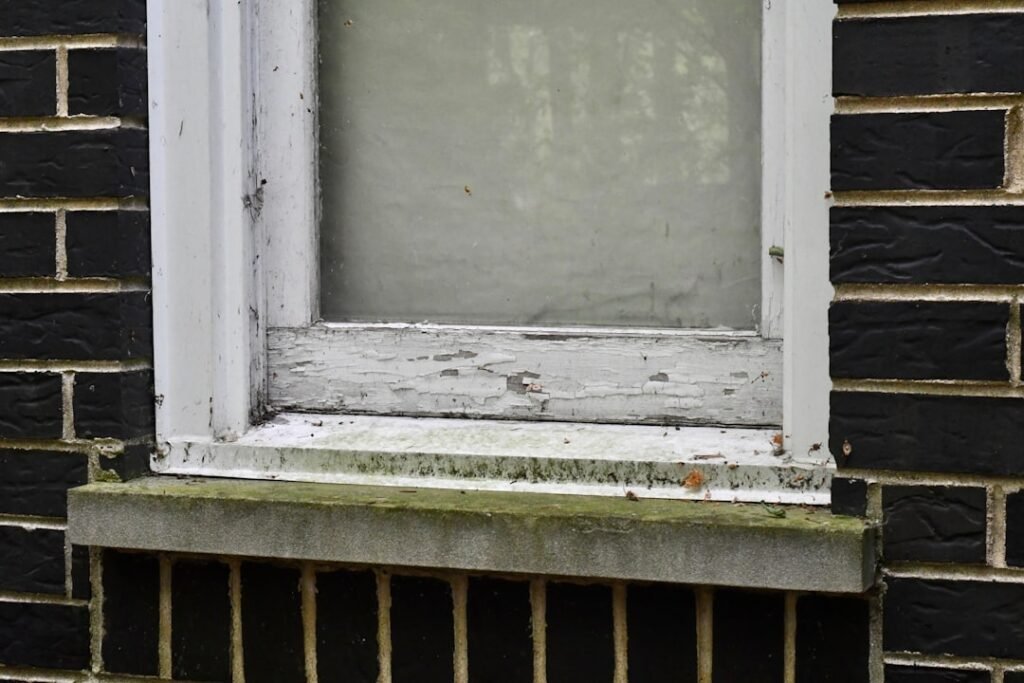
There’s a window on the south side of our house that my 10-year-old walked past every single day for two years before either of us noticed the problem. The paint was peeling, sure — but when I finally pressed my thumb into the wood beneath it, it sank in like soft cheese. The window sill had been quietly rotting from the inside out, and by the time we caught it, water had already started working its way toward the rough framing underneath.
That’s how rot works. It doesn’t announce itself. It just keeps going until you’re looking at a much bigger repair bill than you bargained for. In Connecticut, where we go from humid summers to hard freezes and back again every single year, exterior wood takes a beating. Window sills are especially vulnerable because they’re horizontal, they collect water, and they’re often the last thing homeowners think to inspect.
The good news is that replacing a rotted or damaged window sill is absolutely a DIY job. I did ours on a Saturday with my 12-year-old handing me tools and my 15-year-old running the miter saw under supervision. Total cost was around $40 in materials. A contractor would have charged us $200 to $400 for the same work. Here’s exactly how to do it right.
Why Window Sills Rot — And Why Connecticut Makes It Worse
A window sill is the horizontal board at the very bottom of your window frame — the part that angles slightly downward on the outside to shed water away from the house. When caulk fails, when paint cracks, or when the sill loses its slope over time, water stops shedding and starts pooling. Once moisture gets into bare wood, especially older softwood like pine or fir common in Connecticut’s aging housing stock, rot follows quickly.
Our freeze-thaw cycles make this worse. Water gets into a small crack, freezes, expands, opens the crack wider, thaws, lets more water in, and repeats all winter. By spring, what was a hairline crevice in October is a gaping gap in April. If you’ve already been dealing with water intrusion issues in your home, checking your window sills should be high on your list — they’re a surprisingly common entry point.
Before you assume you need a full replacement, poke around with a screwdriver or your thumb. If the wood feels soft, spongy, or crumbles at all, replacement is the right call. If it’s just surface paint failure with solid wood underneath, you might be able to get away with cleaning, priming, and repainting. But when the wood itself is compromised, don’t patch what needs to be replaced.
What You’ll Need
- Pry bar or flat bar (a small one works best for this job)
- Oscillating multi-tool or utility knife for cutting through old caulk and paint
- Miter saw or circular saw for cutting your new sill to length
- Hammer and nail set
- Tape measure and pencil
- Drill and bits
- Sandpaper (80 and 120 grit)
- Exterior wood filler or epoxy wood consolidant if there’s minor rot in surrounding areas
- Exterior-grade 1×6 or 1×8 pine or PVC trim board (PVC is my strong preference — more on that below)
- Exterior wood primer and paint
- Paintable exterior caulk
- 2.5-inch exterior screws or galvanized finish nails
- Safety glasses and work gloves
A quick note on materials: I used cellular PVC trim board for our replacement sill, and I’d do it again without hesitation. It doesn’t rot, it doesn’t absorb moisture, it takes paint well, and it holds up beautifully through Connecticut winters. It costs a little more than pine, but when you factor in that you’ll never have to replace it again, it’s the smarter investment. If you prefer wood, use a high-quality exterior pine and make sure to prime all six faces — including the cut ends — before installation.
Step 1: Score and Remove the Old Sill
Start by running a utility knife or your oscillating multi-tool along every edge where the old sill meets the house — along the side casings, along the bottom where it meets the siding, and along the back edge where it meets the window jamb. You want to cut through all the old caulk and any paint bridges before you start prying. Skipping this step can pull paint and wood off your casing or siding, turning a clean job into a messy one.
Once you’ve scored around the entire perimeter, use your flat bar to gently work the old sill loose. Start at one end and work slowly. In most cases the sill is either face-nailed from the top, end-nailed through the casing, or both. You may need to pull a few nails before it comes free. If the sill is so rotted that it crumbles as you remove it, that’s actually fine — it makes removal easier and confirms you made the right call replacing it.
With the old sill out, inspect the rough framing and the window jamb behind it carefully. Press on the wood with your screwdriver. If anything feels soft, treat it with an epoxy wood consolidant before proceeding — products like LiquidWood or Minwax High Performance Wood Hardener soak into compromised wood and re-harden it. Let it cure fully before installing the new sill on top.
Step 2: Take Careful Measurements
Measure the width of the opening from outside casing edge to outside casing edge. Also note the depth of the sill — how far it projects out from the wall face — and the angle of the bevel, which is typically around 10 to 15 degrees so water runs away from the house. Most replacement sills keep the same depth and angle as the original, so use the old sill as a template if it’s still intact enough.
For the horn ends — the small ears that extend past the side casings on either side — a typical overhang is about an inch on each side. These aren’t just decorative. They help direct water away from the casing joints. If your old sill had them, keep them on the new one.
My 15-year-old measured this opening twice while I watched, and we talked through why the slight angle matters. He’s at the age where the “why” behind things really starts to click, and I love those moments — understanding that a 10-degree slope is the difference between a sill that lasts 30 years and one that rots in five is the kind of practical geometry that sticks with you.
Step 3: Cut Your New Sill
Transfer your measurements to the new board and cut it to length. If your sill has horn ends, those are simple 90-degree cuts — just extend the board past the casing width by your desired amount on each side. The tricky cut is the bevel along the top face, which you’ll make with your table saw or circular saw set to the appropriate angle. Match whatever angle the original sill had. If you’re not comfortable with angled rip cuts, a 1×6 exterior board with a standard 10-degree bevel plane can get you close enough.
Once cut, dry-fit the new sill in the opening before any fasteners or caulk go in. It should sit snugly against the back of the window jamb, rest flush against the bottom of both side casings, and project out from the wall face at the right depth. Take your time getting this right. A sill that doesn’t fit well won’t shed water properly no matter how well you caulk it.
Step 4: Prime and Prepare Before Installation
If you’re using wood (not PVC), prime all six faces of the new sill with a quality exterior oil-based or shellac-based primer before you install it. This step gets skipped all the time, and it’s why wood sills fail prematurely. Pay special attention to the end grain, which absorbs moisture faster than any other surface. Two coats on the ends is not overkill.
Let the primer dry fully before moving forward.
Step 5: Install the New Sill
Run a bead of exterior caulk along the back edge where the sill will meet the window jamb, and along the underside where it will rest on the framing. Set the sill into place and press it firmly in. Then fasten it with either galvanized finish nails or exterior screws — I prefer screws for the holding power, countersunk so they sit just below the surface. Pre-drill your holes to avoid splitting the wood, especially near the ends.
Once fastened, fill the screw or nail holes with exterior wood filler and let it dry. Then caulk every joint — both sides where the sill meets the casing, the back joint where it meets the window jamb, and any gap along the bottom where it meets the siding. Use a good paintable exterior caulk and tool the joints smooth with a wet finger. This caulking work is what separates a sill that lasts from one that fails again in three years. We have a full guide on caulking technique that’s worth a read if you want to get those joints really clean and professional-looking.
Step 6: Paint and Finish
Once the caulk has cured — check the label, but usually 24 hours before painting — apply two coats of exterior paint to match your trim. Use a quality exterior acrylic latex paint, and don’t rush between coats. Good paint on a properly primed, properly caulked sill is your last line of defense against moisture, and it’s worth doing right.
My 12-year-old handled the painting on our repair, and honestly he did a cleaner job than I expected. I’ve learned that kids rise to the level you give them — hand them a real brush and treat it like real work, and they take it seriously. He was proud of that finished sill for weeks. I still am too.
How to Spot Window Sill Problems Before They Get Serious
Going forward, make a habit of walking your home’s exterior every spring and fall as part of your seasonal maintenance routine. Look at every window sill for these warning signs:
- Peeling or bubbling paint — usually the first visible sign of moisture getting in
- Discoloration or dark staining — indicates moisture has been sitting
- Soft spots when pressed — rot has begun
- Gaps in caulk joints — water is getting in even if the wood still feels solid
- Cracks running along the grain — common after hard winters, and they open wider every freeze-thaw cycle
Catching any of these early means the repair stays simple. Wait too long and you’re into rotted framing, water-damaged interior walls, and potentially mold — which the EPA notes can begin growing on building materials in as little as 24 to 48 hours after moisture exposure. That’s not a repair any of us want to tackle on a Saturday morning.
While you’re doing your seasonal walk-around, it’s also a great time to check your window caulk, your door weatherstripping, and any trim boards that might be showing early signs of wear. A little maintenance every season keeps the big expensive repairs at bay — and if you’ve been working through winterizing your home before cold weather hits, adding a window sill inspection to that checklist makes good sense.
When to Call a Professional Instead
Most window sill replacements are firmly in DIY territory. But there are a few situations where you should bring in a pro:
- The rot has spread into the window jamb, king studs, or rough framing — structural repairs require more expertise
- You find evidence of lead paint and have young children in the home — the EPA’s Renovation, Repair and Painting Rule applies to pre-1978 homes and outlines safe work practices
- Multiple windows show significant rot — at that scale, a contractor with volume pricing may make more economic sense
- The window itself is failing, not just the sill — if the frame is racked or the glass is broken, that’s a different repair entirely
Knowing the difference between a job you can handle and one you shouldn’t is a mark of wisdom, not weakness. I tell my boys that all the time. There’s no shame in calling for help when the situation calls for it.
A Simple Repair That Protects Everything Else You’ve Built
Replacing a window sill isn’t glamorous work. Nobody’s going to walk into your house and compliment your exterior trim. But here’s what I know after years of maintaining an older Connecticut home: the unglamorous repairs are the ones that keep everything else from falling apart. A solid, well-sealed window sill means your walls stay dry, your paint lasts longer, your insulation performs the way it should, and you don’t end up tearing out drywall next winter wondering where all that water came from.
We did this repair for under $40 and a Saturday morning. My boys learned to measure twice, how to run a miter saw safely, why priming matters, and what rot looks like before it gets out of hand. That’s a good morning’s work by any measure. God’s been gracious to give us this home, and taking care of it — teaching my sons to take care of it — feels like the least we can do in return.
Get out there this weekend and walk your window sills. Press on them. Look at the caulk. You might be surprised what you find — and now you know exactly what to do about it.

Pingback: How to Replace a Worn or Broken Exterior Window Casing Yourself — A Connecticut Dad’s Complete Guide to Stopping Rot, Drafts, and Water Damage Before It Wrecks Your Siding - cthomerepairandtutoring.com