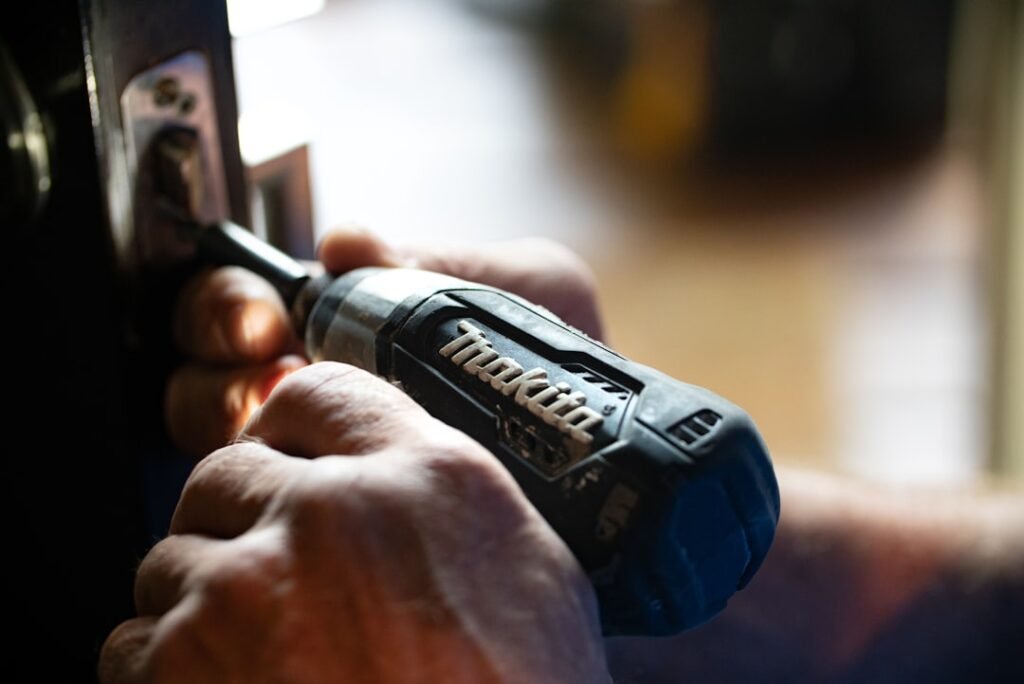
There are certain things around the house that fail so gradually you almost don’t notice until one day they just stop working entirely. Door knobs are like that. Ours started showing the signs about a year ago — a little wobble here, a sticky latch there, the kind of thing where you’d jiggle the handle twice and think nothing of it. Then one Saturday morning, my 12-year-old tried to get into the bathroom and the knob practically spun in his hand. The latch didn’t retract. The door didn’t open. We had a mildly panicked kid on one side and a completely broken lockset on the other.
That’s when I decided we were done waiting on this one. Replacing a door knob and lockset is one of those repairs that sounds more intimidating than it actually is. With the right parts and about 30 to 45 minutes, you can swap out a worn or broken lockset, upgrade the security on an exterior door, or just replace that builder-grade brass knob that’s been embarrassing you since you moved in. My boys have helped me do this on three doors now, and every single one of them could walk you through the process at this point.
Let’s do this right.
Why Door Knobs and Locksets Fail — And Why It Matters in Connecticut
Older Connecticut homes — and we have plenty of them here — often have original hardware that’s been through decades of temperature swings, humidity cycles, and heavy use. The internal mechanisms wear out. Springs lose tension. Latch bolts corrode. The screws holding the trim plates strip out from the wood over years of tightening and retightening.
Even newer homes aren’t immune. Builder-grade locksets are often the cheapest hardware on the market, and they reflect that. The tolerances are loose, the finishes wear fast, and they typically don’t last more than 10 to 15 years under daily use by a family. When you’ve got four boys running in and out of rooms all day, “daily use” is an understatement.
Beyond convenience, a failing lockset is a real security concern on exterior doors. A worn deadbolt or a loose strike plate doesn’t protect your family the way it should. That’s reason enough to address it immediately rather than putting it off another season.
What You’ll Need Before You Start
The good news is that this project requires minimal tools. Most homeowners already have everything they need sitting in their toolbox. If you’re still building yours out, check out my guide to building a DIY starter tool kit — it covers exactly what you should have on hand for repairs like this one.
Tools:
- Flathead screwdriver
- Phillips head screwdriver
- Tape measure
- Utility knife (for cleaning out the mortise if needed)
- Chisel (optional, for adjusting the strike plate mortise)
- Drill with bits (if you’re filling and re-drilling screw holes)
Supplies:
- Replacement lockset or door knob (matched to your door’s bore hole size and backset measurement)
- Replacement strike plate (usually included with new lockset)
- Wood filler or toothpicks and wood glue (if screw holes are stripped)
- Painter’s tape (optional, to protect the door finish)
Before you go buy a new lockset, take two measurements from your existing hardware: the backset (distance from the edge of the door to the center of the bore hole — typically 2-3/8 inches or 2-3/4 inches) and the cross bore diameter (the large hole through the face of the door — usually 2-1/8 inches on most residential doors). Most standard locksets are designed to fit both backset sizes, but confirm before you buy. Bring the old lockset to the hardware store if you’re unsure — the folks at your local Ace or Home Depot are usually helpful with this.
Step 1: Remove the Old Door Knob
Start by examining the inside knob. Most interior locksets have a small slot or hole on the neck of the knob itself — that’s the release point. Slide a flathead screwdriver or a stiff wire into that slot while pulling on the knob, and it’ll pop right off. Some older knobs have visible screws on the rose plate (the decorative trim plate against the door). Unscrew those, and the rose plate will come free as well.
On the exterior side, the knob should pull off once the interior side is released. Set both aside.
Now remove the latch assembly. It’s held in place by two screws on the edge of the door (the door’s latch face plate). Unscrew those, then pull the latch mechanism straight out of the bore hole. Sometimes it’s a little sticky from paint or age — wiggle it gently and it’ll come free.
This is a great moment to hand the old hardware to a curious kid and let them figure out how it works. My 10-year-old spent a good ten minutes taking apart the old knob mechanism just to see what was inside. That kind of hands-on curiosity is worth encouraging.
Step 2: Inspect the Door and Prep the Opening
Before you install anything new, take a look at what you’re working with. Check the bore hole and the latch hole for any damage, swelling, or old paint buildup. Clean out any debris with a utility knife if needed. If the screw holes for the latch face plate are stripped, this is the time to fix them — pack the holes with toothpicks and a drop of wood glue, let it dry, then trim flush. This gives the new screws something solid to bite into.
Also check your strike plate mortise on the door frame. Is it in good shape? Is the old strike plate loose? A properly seated strike plate is critical for both smooth latching and door security. If the mortise is too shallow for the new strike plate, use a sharp chisel to deepen it slightly so the plate sits flush with the frame.
Step 3: Install the New Latch Assembly
Your new lockset will come with a latch bolt assembly — the piece with the angled or spring-loaded bolt that slides into the door frame. Before inserting it, confirm which direction the angled face of the latch should point. The angled side should always face toward the direction the door closes — meaning when the door shuts, the angled side hits the strike plate first and compresses the bolt. If it’s backward, the door won’t latch properly.
Slide the latch assembly into the edge of the door and secure the face plate with the provided screws. Snug them down but don’t overtighten — you can strip the holes easily if you go too hard with a power drill.
Step 4: Install the New Knob or Lockset
Most modern locksets come in two halves — an exterior piece and an interior piece. The exterior half typically has a long spindle or mounting plate that passes through the latch mechanism. Insert the exterior half first, threading the spindle or connecting bar through the latch. Then mount the interior half so it connects with the exterior piece and aligns with the rose plate.
Follow the manufacturer’s instructions here — they vary slightly by brand, but the concept is universal. Once both halves are in place, secure the rose plate screws on the interior side. They should pull the two halves snugly against the door face. Test the knob before moving on — it should turn smoothly in both directions and the latch should extend and retract cleanly.
If you’re replacing an exterior lockset that includes a deadbolt, the installation process is nearly identical. The deadbolt cylinder mounts in a separate bore hole above the knob, and the thumb-turn interior piece connects through the door in the same fashion. Always test the deadbolt with the door open before calling it done — make sure the bolt extends and retracts fully without resistance.
Step 5: Install the Strike Plate
The strike plate goes on the door frame and receives the latch bolt when the door closes. Most new locksets include a new strike plate, and I’d encourage you to use it rather than reusing the old one — especially on exterior doors where security matters.
Close the door slowly and let the latch bolt press lightly against the frame to mark where the new hole needs to be. If you’re replacing an existing strike plate with one of similar size, the existing mortise should work fine. Align the new strike plate over the mortise, mark the screw holes, and drive the screws in. Use 3-inch screws on exterior door strike plates if possible — they reach past the door frame and into the stud behind it, which dramatically increases kick-in resistance. This is something I feel strongly about. Protecting your family is worth two extra minutes and a couple of longer screws.
The Cybersecurity and Infrastructure Security Agency’s home security guidance specifically recommends reinforced strike plate installation as one of the most effective low-cost upgrades you can make to a residential door. That’s not a minor detail.
Step 6: Test Everything Thoroughly
Open and close the door several times. The latch should engage cleanly without you having to lift or push the door. Turn the knob from both sides and confirm the latch retracts fully each time. If you installed a deadbolt, lock and unlock it from both the exterior key side and the interior thumb-turn side.
If the latch doesn’t align cleanly with the strike plate hole, you have a couple of options. First, check whether the door itself has shifted — this is common in Connecticut homes where seasonal humidity causes wood doors to expand and contract. You can enlarge the strike plate hole slightly with a file or chisel, or adjust the strike plate position by elongating the mortise in the direction needed.
Also make sure the door closes all the way without the knob needing to be turned. If the latch bolt is dragging on the edge of the strike plate, it either means the strike plate is slightly misaligned or the latch bolt is set too aggressively. Most latch assemblies have an adjustable spring tension — consult the instructions for your specific model.
What to Do With Stripped Screws and Old Paint Buildup
In older Connecticut homes, it’s very common to find layers of paint built up around door hardware. If the new rose plate doesn’t sit flat against the door because of paint ridges, carefully score around the area with a utility knife and scrape away any buildup until the plate can sit flush. It’s worth taking the extra five minutes — a gap between the rose plate and door looks sloppy and can let drafts in on exterior doors.
Stripped screw holes are also common, especially in doors that have had hardware replaced or adjusted multiple times. The toothpick-and-glue method I mentioned earlier works reliably for smaller holes. For larger damage, a dab of two-part wood filler, allowed to cure fully before drilling, gives you a solid base. This same principle comes up when patching holes in drywall — good prep work is most of the battle.
Choosing the Right Lockset for Connecticut Homes
Not all locksets are created equal. For interior doors — bedrooms, bathrooms, closets — a standard passage set or privacy set works fine. Privacy sets have a push-button or turn-button lock on the interior and an emergency release slot on the exterior (useful when a 6-year-old accidentally locks himself in the bathroom).
For exterior doors, I’d strongly recommend an ANSI Grade 1 or Grade 2 rated lockset. Grade 1 is the highest residential security rating and represents hardware that has passed rigorous cycle and force testing. Brands like Schlage and Kwikset Smartkey both make solid Grade 1 options in the $50–$100 range. For a complete exterior door security upgrade, pair the new lockset with a reinforced strike plate and consider whether your door itself needs attention — if you’ve been dealing with drafts or poor sealing, that’s a separate but related issue I covered in my guide to fixing a drafty door with weatherstripping.
The American National Standards Institute (ANSI) grading system for door hardware is the most reliable benchmark for comparing lockset quality — look for it on the packaging before you buy.
Making It a Teaching Moment
Every one of these repairs is a chance to pass something down. My 15-year-old now handles the measurement and hardware selection almost entirely on his own when we do a project like this. My 12-year-old is getting good with a screwdriver and understands why proper screw length matters for security. Even my 6-year-old can hand tools and watch the process — and trust me, they’re absorbing more than it looks like.
Proverbs 22:6 says to train up a child in the way he should go. I think about that verse in a lot of contexts — faith, character, work ethic. But I also think it applies to practical competence. A boy who knows how to replace a lockset, fix a running toilet, patch a wall, and maintain his own home is a boy who grows into a capable, confident man. That’s worth more than any Saturday of video games.
This repair costs $30 to $80 in parts depending on the lockset you choose, takes less than an hour, and gives you a smooth-working, secure door that could last another 20 years. Do it once, do it right, and let your kids watch you do it. That’s what this whole blog is about.
