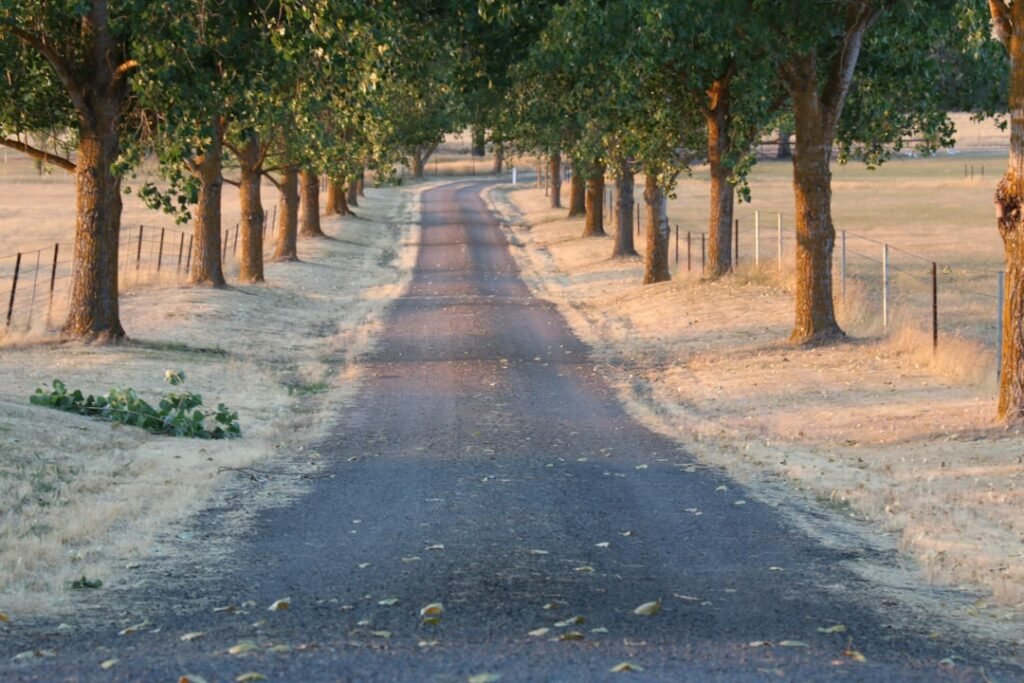
Every spring in Connecticut, I do a slow walk around the house — checking the foundation, the gutters, the siding — looking for whatever the winter left behind. And every spring, my driveway humbles me a little. Cracks that weren’t there in October. A low spot where water is pooling near the garage door. The freeze-thaw cycle we deal with up here is genuinely relentless, and asphalt takes the beating quietly until one day it doesn’t anymore.
This past spring, I brought my 12-year-old and my 10-year-old out with me for the inspection. My 12-year-old spotted a crack running almost three feet along the left side of the driveway that I had somehow walked past all winter. We talked about why it happens — water gets into a small crack, freezes, expands, and pries the asphalt apart a little more each time. He nodded like it clicked. That’s exactly the kind of moment I love. A driveway repair becomes a lesson in physics, patience, and not ignoring small problems until they become big ones.
If your asphalt driveway is looking rough — cracked, faded, or starting to crumble at the edges — this guide is for you. A professional driveway reseal can cost anywhere from $300 to $700 or more depending on size. Done yourself on a Saturday morning, you’re looking at $80 to $150 in materials. That’s a difference worth getting your hands dirty for.
Understanding What’s Actually Happening to Your Driveway
Asphalt is a flexible material, which is part of why it works so well as a paving surface. But flexibility has limits, especially when you’re asking it to handle Connecticut winters. The ground beneath your driveway expands and contracts with every freeze-thaw cycle. The asphalt itself dries out and oxidizes over time, losing the oils that keep it pliable. UV exposure from summer sun accelerates that drying. Rain and snowmelt push into every small opening.
The result is a gradual breakdown — small hairline cracks become wider cracks, wider cracks become potholes, and potholes become structural problems that no amount of sealer can fix. The goal of driveway maintenance is to interrupt that cycle early, before minor issues become expensive ones. Sealcoating doesn’t make a bad driveway good, but it absolutely makes a decent driveway last significantly longer.
According to the Pavement Preservation & Recycling Alliance, regular sealcoating and crack filling can double the life of an asphalt surface. That’s not marketing — that’s the kind of stewardship that makes financial sense for any homeowner.
Assess First — Know What You’re Working With
Before you buy a single can of crack filler, walk your entire driveway and take stock of what you have. Not all driveway damage is the same, and the repair approach differs depending on what you’re dealing with.
- Hairline cracks (under 1/4 inch wide): These can be addressed with liquid crack filler or caught by a good coat of sealer.
- Medium cracks (1/4 to 1/2 inch wide): These need proper crack filler applied and tooled before sealing.
- Wide cracks or alligatoring (a network of interconnected cracks): Alligatoring usually means the base layer is compromised. You can patch the surface, but the underlying issue may eventually require professional attention.
- Potholes or deep depressions: These need cold-patch asphalt repair material tamped firmly into place before any sealing begins.
- Edge crumbling: Common in New England driveways where tree roots, frost heave, or soil erosion undermines the edges. This needs cold patch material and possibly re-edging.
If more than 25 to 30 percent of your driveway surface is showing alligatoring or structural damage, sealing alone won’t save it. Be honest with yourself during this assessment. There’s no point sealing a driveway that needs to be replaced — you’ll just be sealing in problems.
What You’ll Need
- Asphalt crack filler — either pourable liquid (for smaller cracks) or rope-style backer rod plus pourable filler (for wider gaps)
- Cold-patch asphalt repair mix — for potholes and deeper depressions
- Driveway sealer — sold in 5-gallon buckets; plan on one bucket per roughly 250 to 300 square feet
- Stiff-bristle push broom or blower — for cleaning the surface
- Garden hose with spray nozzle — for rinsing
- Driveway sealer squeegee or brush applicator — the long-handled squeegee-style applicators work best
- Pavement edging tool or old brush — for cutting in along garage doors and edges
- Duct tape or plastic sheeting — to protect garage floors and adjacent concrete
- Work gloves, old clothes, and eye protection — sealer stains everything it touches
Step One: Clean the Surface Thoroughly
This is the step people rush, and it’s the one that determines whether your sealer bonds properly or peels up within a season. I cannot stress this enough: sealer will not adhere to a dirty surface.
Start by blowing or sweeping off all loose debris — leaves, dirt, gravel, anything sitting on the surface. Then tackle any oil stains. Motor oil and grease are the enemy of driveway sealer. Scrub oil spots with a stiff brush and a degreaser or trisodium phosphate (TSP) solution. Rinse thoroughly.
Once the surface is clean, let it dry completely. In Connecticut spring weather, that might mean waiting a full day after rinsing. Sealer applied over even slight moisture won’t cure properly. I usually do my cleaning on a Friday evening and seal on Saturday morning if the weather cooperates.
Step Two: Fill All the Cracks
With the surface clean and dry, go back to every crack you identified during your walk-through. For cracks under a quarter inch, a pourable rubberized crack filler does the job. Just pour it in carefully, slightly overfilling the crack, then smooth it with a putty knife or the edge of an old piece of wood.
For wider cracks, use a foam backer rod — a cylindrical foam rope you press into the crack first to give the filler something to sit on — then apply your pourable filler on top. This prevents the filler from sinking too deep and wasting material.
For potholes and depressions, cold-patch asphalt mix is your material. Clean out any loose debris from the hole, overfill it slightly with the cold-patch material, and tamp it down firmly with a hand tamper or even a piece of lumber. Driving over it a few times with your car helps compact it further. Let it sit for at least 24 hours before sealing over it.
Allow all crack filler and patch material to cure fully before you move on. Rushing this step is how you trap moisture under your sealer.
Step Three: Protect Surrounding Surfaces
Driveway sealer is petroleum-based and it stains. Use duct tape or painter’s tape along the bottom edge of your garage door. Lay plastic sheeting or old cardboard along any concrete surfaces that border your driveway. If any sealer gets on concrete, it’s extremely difficult to remove.
Also let your neighbors know, or at least be mindful of overspray near their property line. It’s the neighborly thing to do, and honestly, it’s just good practice.
Step Four: Apply the Sealer
Check the weather forecast before you open that first bucket. You need at least 48 hours of dry weather, with temperatures staying above 50°F — ideally warmer. Connecticut spring days can be deceptive, so watch for overnight lows. A good warm stretch in May or early June is often the sweet spot.
Stir the sealer thoroughly. Most products have settled during storage, and mixing is essential for even consistency. Pour a line of sealer across the top of the driveway — near the garage — and work your way down toward the street. Use your squeegee applicator to spread it in long, even passes, working in sections of about four to six feet at a time.
Cut in carefully along edges, the garage door threshold, and any borders with a brush or a smaller applicator. Take your time here — these edges are what people see most, and ragged, uneven edges make the whole job look sloppy.
Two thin coats beat one thick coat every time. A thick application takes longer to dry, can trap moisture, and tends to crack. Apply your first coat, let it dry for at least four hours (longer if the day is cool or cloudy), then apply your second coat going perpendicular to the first. This cross-direction application fills in any thin spots the first coat missed.
Keep the driveway off-limits for at least 24 hours after the final coat — 48 hours is better. My boys know that when Dad seals the driveway, the basketball hoop is temporarily out of commission. They don’t love it, but they understand.
Step Five: Clean Up and Let It Cure
Rinse your squeegee and brushes with water immediately after use — don’t let the sealer dry on your tools. Dispose of any remaining sealer according to your municipality’s guidelines; don’t pour it down a drain or into the yard.
Sealer continues curing for several days after it dries to the touch. Avoid turning your steering wheel sharply while stationary on the surface for the first week or two — this can scuff or tear the fresh sealer coating. It’s a small thing, but it matters.
How Often Should You Seal in Connecticut?
For most Connecticut homeowners, sealing every two to three years is the right maintenance rhythm. Seal too often and you build up too many layers, which can actually cause cracking and peeling. Seal too infrequently and you let UV damage and water intrusion take hold between applications.
A simple visual check tells you a lot. If your driveway looks dark black after rain, the sealer is still doing its job. If it looks gray and weathered, and you can see the aggregate texture clearly, it’s time to seal again.
The Connecticut DEEP also has guidance on proper disposal of leftover pavement products and other household materials — worth checking if you have leftover sealer or old patch compound to get rid of responsibly.
Make It a Teaching Moment
I’ve said it before and I mean it every time: some of the best conversations I’ve had with my sons have happened over a project like this. My 15-year-old helped me pour and squeegee the last time we sealed, and we talked about why we maintain things we own rather than letting them deteriorate. My 10-year-old handled the broom and kept the work area clean, which is a real job — not busy work.
There’s something grounding about taking care of what God has given you — your home, your property, your family. Teaching kids that stewardship means more than just keeping things tidy, but actually investing effort before problems get expensive, is a lesson that goes well beyond driveways. It’s a posture toward life that I hope sticks with them long after they’re grown.
If you’ve been tackling other areas of your home this season, you might also find our guides on winterizing your pipes before the cold hits and stopping basement water intrusion for good worth a read. They pair well with the kind of seasonal thinking that keeps a Connecticut home in fighting shape year after year.
A well-maintained driveway isn’t flashy. Nobody’s going to compliment you on it at church on Sunday. But it reflects the kind of quiet diligence that makes a house into a home — and that’s worth a Saturday morning and a sore back.
