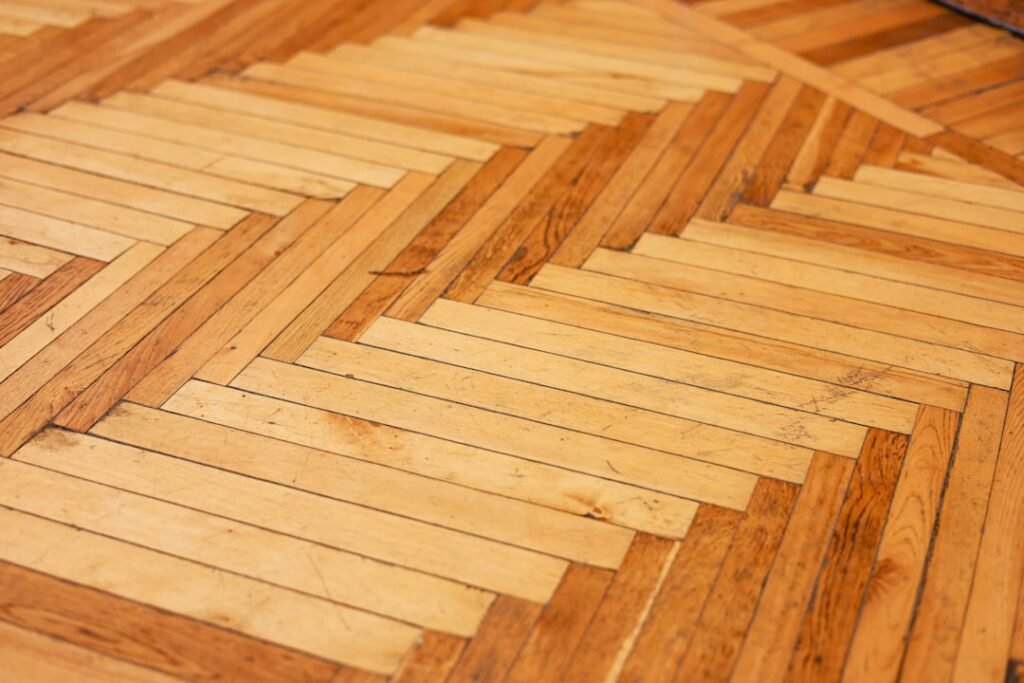
There’s a sound in this house that my wife and I know all too well at 11 o’clock at night. It’s not the furnace kicking on, and it’s not the dog. It’s the unmistakable creak of a particular floorboard in the hallway — the one right outside our bedroom — that announces every late-night trip to the kitchen my boys think they’re sneaking. Our 10-year-old has tested every possible route around it. He has not succeeded.
Squeaky floors are one of those classic old-house problems, and here in Connecticut, where a huge portion of the housing stock dates back to the mid-1900s or earlier, we deal with them constantly. Wood expands, contracts, dries out, and works loose over decades of freeze-thaw cycles and humid summers. The result is subfloor panels or hardwood planks that rub against each other — or against the joists beneath them — and produce that groan that either drives you crazy or, apparently, serves as a home security system for tired parents.
The good news is that squeaky floors are almost always a fixable DIY problem. You don’t need to rip anything up, you don’t need a contractor, and in most cases, you can silence the creak permanently in under an hour. Last Saturday morning I tackled three separate squeaky spots in our living room with my 12-year-old beside me, and I’m going to walk you through exactly how we did it.
Why Wood Floors Squeak in the First Place
Before you fix anything, it helps to understand what’s actually happening under your feet. Squeaky floors are almost always caused by wood moving against wood. That friction produces the sound. There are a few specific culprits:
- Subfloor panels rubbing against joists: The plywood or OSB subfloor is nailed or screwed to the floor joists below. Over time, those fasteners loosen, and the panel flexes and rubs when you step on it.
- Hardwood planks rubbing against each other: Hardwood flooring expands and contracts with seasonal humidity changes. Here in Connecticut, summers are humid and winters are dry — that repeated movement causes boards to work against each other at the tongue-and-groove joints.
- Hardwood planks rubbing against nails: Finish nails can back out slightly over time. When a board moves up and down, that nail shank creates friction against the wood — that’s the squeak.
- Bridging or blocking between joists: Sometimes the wooden bridging installed between joists to prevent twisting works loose and creates its own noise when the floor flexes above it.
Identifying which of these is your actual problem determines which fix you’ll use. Fortunately, the diagnostic process is simple.
Step One: Find the Squeak and Understand Your Floor Structure
Walk the area slowly and deliberately. Step in different spots, shift your weight, and listen carefully. Mark squeaky spots with a piece of painter’s tape so you don’t lose track. You’re trying to narrow the squeak down to a specific board or section — not just a general area.
Next, figure out whether you have access to the subfloor from below. If the squeaky floor is above an unfinished basement or crawl space, you have a huge advantage. Repairs from below are easier, cleaner, and more permanent. If the floor is above a finished space, you’ll need to work from above — which is still very doable, just a different approach.
My 12-year-old and I did the walk-test together and he was surprisingly good at isolating exactly which board was moving. When you get kids involved in the diagnostic phase, they feel ownership over the fix — and that makes them much more invested in learning the actual repair.
Method One: Fixing Squeaks from Below (If You Have Basement Access)
This is the best-case scenario. Have a helper walk the floor above while you’re in the basement or crawl space with a flashlight. Watch the subfloor panels as your helper steps. You’ll often be able to see the panel flex slightly when they hit the squeaky spot.
Once you’ve identified the movement, here’s how to fix it:
- Gaps between the subfloor and joist: If there’s a visible gap where the subfloor panel has pulled away from the joist, squeeze a bead of construction adhesive (like Liquid Nails) into the gap and press a wood shim in gently. Don’t drive it in hard — you’ll create a hump in the floor above. You’re filling space, not jacking anything up.
- Subfloor moving against the joist: Drive short wood screws up through the joist and into the subfloor from below. Use screws that are long enough to grab the subfloor securely but not long enough to poke through your finished floor above. Measure the subfloor thickness (usually 3/4 inch) and the joist depth, and choose accordingly. A 1-1/4 inch screw driven at a slight angle works well for most situations.
- Loose bridging: If you see bridging blocks that have worked loose, renail or screw them back into place.
This method is quiet, invisible, and permanent. It’s also a great opportunity to check your basement ceiling area for other concerns while you’re down there — moisture, insulation gaps, or anything else worth noting.
Method Two: Fixing Squeaks from Above (Finished Floors)
If you can’t get under the floor, don’t worry. There are several solid approaches for surface repairs.
The powdered lubricant method (quickest fix, not always permanent): For squeaks caused by hardwood boards rubbing against each other at the joints, sprinkle powdered graphite, talcum powder, or a dry wood lubricant like WD-40 Specialist Dry Lube along the seam between boards. Work it into the crack with an old paintbrush, then walk back and forth over the spot to work the lubricant into the joint. This often silences a squeak for months or longer, though it may need retreating over time.
The screw method for subfloor squeaks (most reliable): If the squeak is coming from subfloor movement beneath your finished floor, you need to drive screws from above — but you have to do it carefully so you don’t damage the finished surface visibly.
There’s a product called Squeeeeek No More (yes, that many e’s) that is genuinely one of the most useful specialty tools I’ve come across for this exact problem. It comes with a pilot screw, a depth-control driver bit, and special breakaway screws. Here’s how it works:
- You drive the special screw through the finished floor and subfloor, deep into the joist below, pulling the subfloor tight against the joist.
- The screw is designed to snap off below the surface of the wood once it’s set — leaving only a tiny hole that’s easily filled with a wood filler that matches your floor color.
- The result is a nearly invisible repair that eliminates the squeak permanently because you’ve actually fastened the subfloor back to the structure.
You’ll need to locate your joists first. Use a stud finder or the old-fashioned method: look for the rows of finish nails or nail holes in your hardwood — those rows typically run perpendicular to the boards and mark where the flooring was nailed to the joists below. This is how my grandfather taught my dad to find joists before stud finders existed, and it still works perfectly.
Face-screwing with wood plugs (for more rustic or painted floors): If aesthetics aren’t a concern — say, a utility room or a floor you plan to paint — you can simply drill a pilot hole, countersink it, drive a screw into the joist, and fill the hole with a wood plug or wood filler. Quick, effective, and honest-looking in the right setting.
Method Three: Fixing Squeaks in Stairs
Stair treads squeak for the same reason floor boards do — wood movement against wood. The fix depends on your access:
- From above: Drive finish nails or trim screws at an angle through the tread into the riser below it, and through the back of the tread into the riser above. Predrill to avoid splitting. Set the nails and fill with wood filler.
- From below (if the staircase is open-backed): Apply construction adhesive along the joint between tread and riser, then drive screws up through the riser into the tread from behind.
- Glue blocks: Glue and screw small triangular blocks of wood into the inside corner where the tread meets the riser. This reinforces the joint and eliminates the flex that causes squeaking.
My 15-year-old helped me fix our back staircase this way last winter and was genuinely proud of the result. There’s something deeply satisfying about a repair that you can test immediately — one step at a time, listening for silence where there used to be noise.
Tools and Materials You’ll Need
- Stud finder (or sharp eyes for nail rows)
- Drill with Phillips and driver bits
- 1-1/4 to 2-inch wood screws (depending on your approach)
- Construction adhesive (Liquid Nails or similar)
- Wood shims
- Powdered graphite or talcum powder
- Squeeeeek No More kit (optional but excellent for finished hardwood)
- Wood filler matched to your floor color
- Painter’s tape (for marking squeaky spots)
- Flashlight and a patient helper
A Note on Old Connecticut Homes and Subfloor Materials
If your home was built before the 1970s, your subfloor may be diagonal board sheathing rather than plywood panels. This is common in older New England construction and actually changes your approach slightly. Individual boards can’t be shimmed the same way panels can, but they can still be screwed down from above or glued from below using construction adhesive. The This Old House team has excellent resources on working with older construction methods if you want to dig deeper into period-specific repairs.
Connecticut homes also deal with significant seasonal humidity swings. The EPA’s guidance on indoor moisture control is worth a read if your floors squeak more in winter (when indoor air is very dry) and quiet down in summer — that’s a sign of seasonal wood movement, and better humidity control in your home could reduce the problem significantly over time. A whole-home humidifier or even a room humidifier near a badly affected area can help considerably.
And if your floor issues extend to drafty gaps around exterior door frames where the floor meets the wall, that’s a related problem I’ve covered separately — you can check out my guide on fixing a drafty door with weatherstripping for that piece of the puzzle.
When to Call a Professional Instead
Most squeaky floor repairs are genuinely DIY-friendly. But here are situations where it’s wise to call in a flooring professional:
- The squeak is accompanied by visible sagging, bouncing, or soft spots in the floor — that could indicate a structural issue with a joist, not just surface movement.
- You find evidence of water damage or rot when you access the subfloor from below.
- Your hardwood floor is extremely thin from past refinishing and can’t accept another screw or nail without risk of splitting.
- The squeaking is widespread throughout the home and getting progressively worse — this warrants a professional assessment of your floor structure.
I always tell my boys the same thing I tell myself: knowing when a job is beyond your current skill level isn’t defeat — it’s wisdom. Proverbs 11:2 says that with humility comes wisdom, and that applies just as much to home repair as anything else in life.
Getting Your Kids Involved
This is one of those repairs that translates beautifully into a family project. My 12-year-old handled the drill entirely on his own for most of the screws we drove, and my 10-year-old was the designated squeak-tester — walking the floor on command while I listened below. Even my 6-year-old got in on it, helping me mark squeaky spots with painter’s tape and carrying materials back and forth. These moments matter. You’re not just fixing a floor — you’re showing your kids that problems have solutions, that hard work produces results you can feel under your feet, and that a Saturday morning spent learning together is never wasted.
The hallway squeak, for what it’s worth, is still there. I’ll be honest — I’ve left that one intentionally. Some things in a house aren’t broken. They’re just doing their job.
