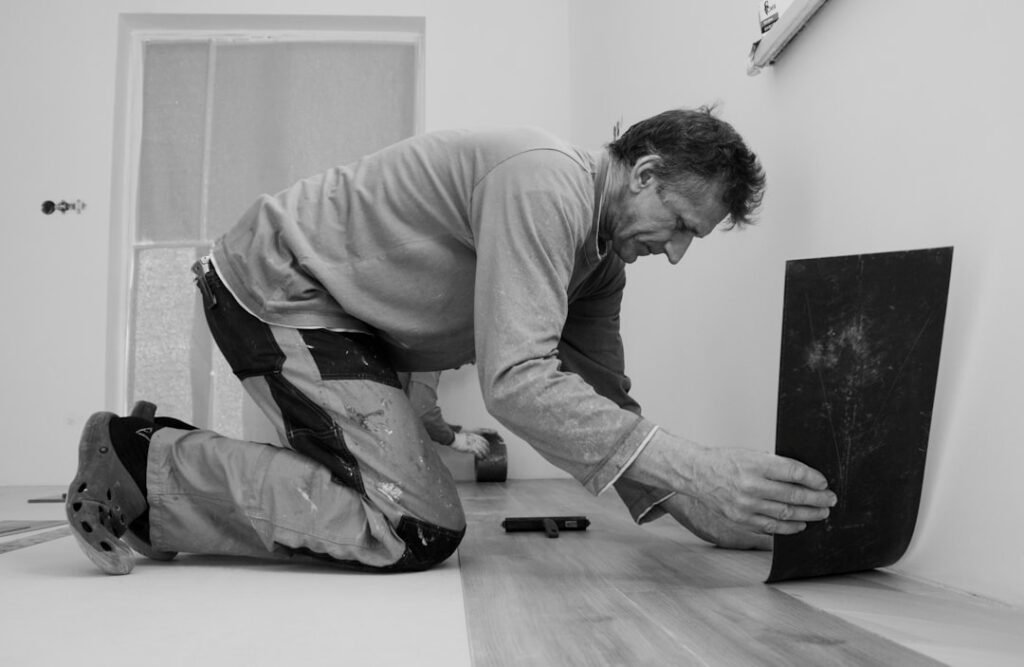
There’s a specific kind of embarrassment that hits when you’re showing guests around your home and your eye catches that one stretch of baseboard — cracked, scuffed, maybe slightly warped from a winter of dry heat — that you’ve been mentally promising to fix for the past two years. I know that feeling well. In our older Connecticut home, the baseboards in the hallway had taken a real beating. Between a radiator that runs hot all winter, four boys who treat the walls like bumper lanes, and the general wear that comes with a lived-in house, the trim looked rough. And once you notice it, you can’t stop noticing it.
The good news? Replacing baseboard trim is one of the most satisfying DIY projects you can take on as a homeowner. It’s not complicated, it doesn’t require specialized skills, and the transformation is dramatic for the amount of effort involved. My 15-year-old helped me knock out the hallway in a single Saturday morning, and even my 12-year-old got in on the cutting work with some supervision. If your baseboards are cracked, pulling away from the wall, water-damaged at the bottom, or just plain ugly, this guide is for you.
Why Connecticut Homes Eat Baseboards Alive
If you live in Connecticut, your home goes through a genuinely punishing thermal cycle every year. From hot, humid summers to cold, dry winters — often with forced hot air or steam radiators running full blast — your interior trim is constantly expanding and contracting. Old homes, especially those built before 1980, frequently have original wood baseboards that have been painted over a dozen times and are starting to crack, split, or separate from the wall entirely.
Moisture is another culprit. Baseboard in bathrooms, laundry rooms, and finished basements takes the brunt of humidity and occasional water splashes. Once it starts to rot at the bottom or swell at the seams, no amount of caulk is going to save it. And if you’ve been dealing with a leaky basement or high bathroom humidity, your baseboards may already be showing the damage. Replacing them — rather than painting over the problem — is always the right call.
What You’ll Need Before You Start
This project doesn’t require a big tool investment. If you’ve already built out a basic toolkit, you likely have most of what you need. If not, check out my guide on building a DIY starter tool kit from scratch — it’ll set you up for this project and dozens more.
Tools:
- Pry bar or flat bar (a 12-inch flat bar works great)
- Utility knife
- Miter saw or miter box with hand saw
- Tape measure
- Pencil
- Nail gun (preferred) or hammer
- Nail set punch
- Caulk gun
- Putty knife
- Safety glasses
Materials:
- New baseboard molding (measure your linear footage and add 10% for waste)
- 2-inch finish nails (16 gauge for nail gun, or hand-drive finish nails)
- Paintable latex caulk
- Wood filler or spackling compound
- Sandpaper (120-grit and 220-grit)
- Primer and paint to match your walls or trim
For baseboard material, I typically use finger-jointed pine primed MDF baseboard from a home improvement store. It’s affordable, accepts paint beautifully, and holds up well. If you’re in a high-moisture area like a bathroom, consider solid PVC baseboard — it will never rot or swell, period. Expect to spend $1.50–$3.50 per linear foot on materials depending on the profile and material you choose.
Step 1 — Remove the Old Baseboard Carefully
Before you rip anything off the wall, score along the top edge of the baseboard with a utility knife. Your old trim is almost certainly caulked and painted in place, and if you skip this step, you’ll pull chunks of drywall or plaster right along with it. Score firmly, running the blade the entire length of the piece.
Next, work your flat bar behind the baseboard — start at a nail location if you can find one, or near a corner. Use a scrap piece of wood behind the bar to protect the wall. Apply steady, gentle pressure rather than a sudden yank. Old baseboard wants to come off in one piece if you give it the chance. Work along the length, moving the bar every 6 to 8 inches, gradually walking the piece away from the wall.
Once a piece is off, pull the remaining nails from the wall using pliers rather than driving them back through. This prevents splintering the drywall face. Set old pieces aside — they make great templates for cutting new pieces if your walls have any unusual angles.
Step 2 — Prepare the Wall
With the baseboard gone, you’ll probably discover some things you’d rather not have seen — minor drywall damage, old paint ridges, or gaps where the flooring doesn’t quite meet the wall. This is normal, and it’s actually one of the best reasons to do this project properly rather than slapping new paint on old trim.
Fill any significant holes or gouges in the wall with spackling compound. Let it dry, then sand it smooth. Sweep or vacuum the floor along the wall — dust and debris will make fitting your new baseboard harder than it needs to be. If you have old caulk residue on the wall, scrape it off with a putty knife so your new trim sits flush.
This is also a great moment to check for any signs of moisture damage near the floor. If you see staining or soft drywall at the base, address that before you close it back up with new trim. Sealing over a hidden moisture problem is always a mistake you’ll pay for later.
Step 3 — Measure and Cut Your New Baseboard
This is where my 12-year-old really gets into it. Measuring and marking is something kids can actively help with, and it builds real spatial reasoning skills. We talk through what we’re doing — why we measure twice, why we’re making an inside corner cut versus an outside corner cut — and it sticks with him in a way a classroom lesson never quite would.
For inside corners (where two walls meet inward, like in a room corner), the traditional approach is to cope one piece against the other. Coping means cutting the profile of the molding at an angle and scribing it to fit against the face of the adjacent piece. For most homeowners doing a first or second baseboard project, inside miter cuts at 45 degrees are acceptable and much simpler — just know that painted mitered inside corners may open slightly over time as your house moves seasonally.
For outside corners (like the corner of a fireplace bump-out or a wall projection), cut both pieces at 45-degree opposing miters so they meet in a crisp point. Take your time here — an off-angle cut on an outside corner is very visible.
For straight runs along a wall, cut your pieces with square ends unless they butt up against door casing, where you’ll want a clean square cut tight to the casing edge.
Measure each wall individually rather than assuming rooms are perfectly square — because they almost never are, especially in older Connecticut homes. Cut a little long and sneak up on the fit rather than cutting short.
Step 4 — Install the New Baseboard
Start with the longest, most visible wall first. Hold the piece in place and check the fit before nailing anything. If there’s a slight gap at the top because your floor isn’t perfectly level, a bead of caulk will handle it. If the gap is significant, you may need to scribe the bottom of the baseboard to match the floor contour — but in most rooms, this isn’t necessary.
Nail through the baseboard into the wall studs. Studs are typically 16 inches on center — use a stud finder, or look for the dimples from old nails in the drywall as a guide. Drive one nail near the top of the baseboard (into the stud) and one near the bottom (into the sole plate of the wall framing). If you’re using a nail gun, this goes quickly. If you’re hand-nailing, a nail set is essential for sinking the nail heads below the surface without hammer-marring the wood.
Work around the room, fitting pieces as you go. Take extra care at corners — dry-fit before nailing so you can adjust angles if needed. A little patience here saves a lot of frustration with wood filler later.
Step 5 — Fill, Caulk, Sand, and Paint
Once everything is nailed in place, fill all nail holes with wood filler or spackling compound. Let it dry completely, then sand smooth with 120-grit and finish with 220-grit for a clean surface that accepts paint without texture.
Next, run a thin, consistent bead of paintable latex caulk along the top edge where the baseboard meets the wall, and along any inside corner seams. Tool the caulk with a wet finger for a smooth, professional finish. This is the step that separates a DIY job that looks amateur from one that looks like trim work you paid a carpenter to do. Don’t skip it. If you haven’t caulked much before, the same technique applies as when caulking your bathroom — smooth, steady pressure on the gun and a confident stroke.
Once caulk has dried (check the label — usually 30 minutes to an hour), prime any bare wood and paint to match your existing trim. Two thin coats beat one thick coat every time. I find that painting the right way makes all the difference — don’t load your brush too heavy, work the paint into the grain, and let each coat dry fully before the next.
When to Call a Professional Instead
Baseboard replacement is genuinely DIY-friendly, but there are a few situations where it’s worth calling in a finish carpenter. If your home has intricate Victorian or Craftsman-era molding profiles that need to be matched exactly, a specialty millwork shop may need to custom-mill replacement pieces — and installing them properly with coped joints at every corner is a skill that takes real practice. Similarly, if you discover that the moisture damage behind your baseboard has compromised the wall framing or subfloor, stop and get a professional assessment before you close things back up.
The Connecticut Department of Consumer Protection contractor license lookup is a useful resource for verifying that any contractor you hire is properly licensed in the state.
The Finished Result — and Why It Matters More Than You Think
When we finished the hallway, my 15-year-old stepped back and said, “It actually looks like a real house now.” I laughed, but he wasn’t wrong. Clean, crisp baseboard does something subtle but powerful to a space — it frames every room, pulls the floor and wall together, and signals that the home is cared for. It’s the kind of detail you don’t notice when it’s done right, but can’t ignore when it’s wrong.
Beyond the aesthetics, this project taught my boys something I think is genuinely important: that most things in a home aren’t mysterious. They’re just materials, cut and fit and fastened by someone who took the time to learn how. Whether it’s a stair tread, a window sill, or a stretch of baseboard, the principle is always the same — measure carefully, cut honestly, fit patiently, and finish it right.
I’m grateful every time I get to model that for my kids. There’s something that feels almost like a prayer in a Saturday morning project done right — the work of your hands, the company of your family, and a home that looks a little better by lunch than it did at breakfast.
If you found this guide helpful, take a look around the rest of the blog. There’s plenty more here to help you tackle your home one manageable project at a time — without calling a contractor and without breaking the bank.
