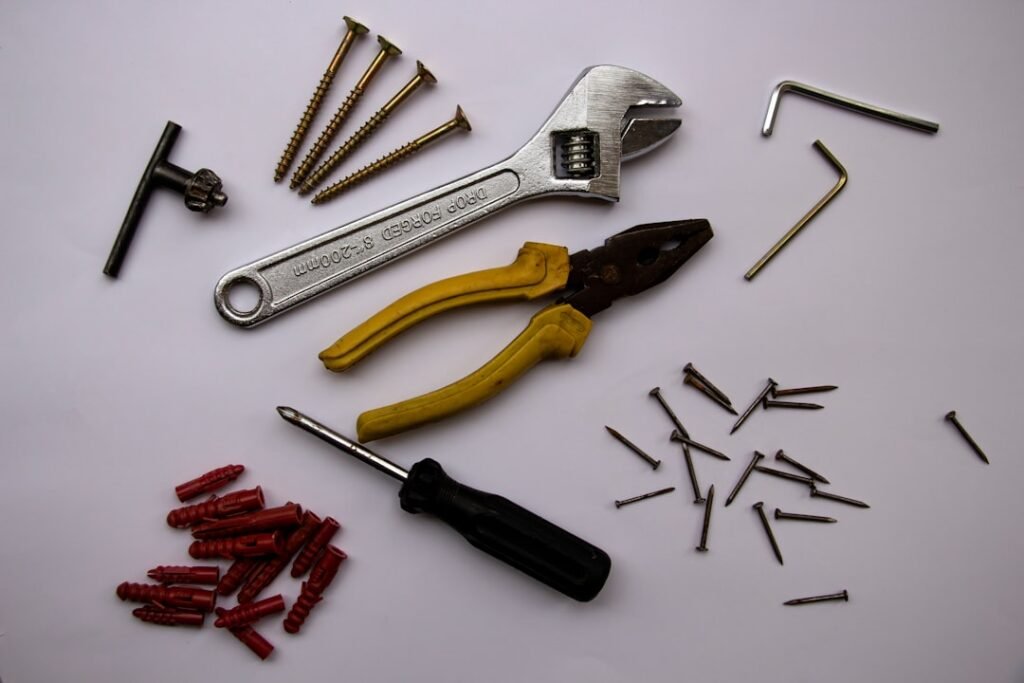
A few years back, my neighbor called me over in a mild panic. His toilet supply line had started dripping, his cabinet door hinge had fallen off, and a screw was backing out of his deck railing — all in the same weekend. When I asked him what tools he had on hand, he held up a butter knife, a pair of needle-nose pliers he’d found in a junk drawer, and a hammer he’d borrowed from his father-in-law sometime around 2011 and never returned.
He’s a smart guy. Good dad. Takes care of his family. But nobody had ever sat him down and said, here’s what you need. And that conversation right there is exactly why I’m writing this post.
Whether you just bought your first home in Connecticut, you’re finally ready to stop calling a handyman for every little thing, or you want to give your teenager a fighting chance at adulthood, building a proper starter tool kit is one of the best investments you can make. We’re not talking about a garage full of power tools. We’re talking about a focused, practical set of tools that lets you handle the problems that actually show up — the leaky faucet, the loose hinge, the drywall ding, the stuck window.
I’ve built up my own kit over years of trial and error, and I’ve made it a point to teach my boys how to use every single tool in it. My 15-year-old can now swap out a light switch on his own. My 12-year-old helped me patch a hole in drywall last spring without me touching a trowel. That doesn’t happen by accident — it happens because the right tools are always accessible and every project is a classroom.
Let’s walk through exactly what belongs in a solid starter kit, what to buy first, what to skip for now, and how to store it all so it actually gets used.
Why Connecticut Homes Specifically Demand Good Tools
Connecticut housing stock is older than average. We’ve got colonials and capes built in the 1940s and 50s, split-levels from the 60s, and raised ranches from the 70s — all of them with their own quirks, their own aging systems, and their own maintenance demands. Add in our climate — brutal winters, humid summers, freeze-thaw cycles that wreak havoc on caulk and concrete — and you’ve got a home that genuinely needs attention year-round.
I’ve written about winterizing your pipes, fixing drafty doors, and tackling leaky basements — and every single one of those projects started with having the right tool in my hand before the problem got worse. Being prepared isn’t just about saving money, though you will save a lot of it. It’s about not being helpless in your own home.
The Non-Negotiable Foundations: Hand Tools You Need First
Start here. These are the tools that earn their keep every single month. Don’t skip any of them, and don’t cheap out on quality either — a good hammer lasts a lifetime, while a flimsy one will frustrate you and potentially hurt you.
- 16-oz claw hammer — The workhorse of any tool kit. Use it for driving nails, pulling them, and a hundred things in between. A fiberglass or steel handle is more durable than wood for most people.
- Phillips and flathead screwdrivers (multiple sizes) — Buy a 6-piece set minimum. You will use these constantly. The number of screws holding your house together is staggering.
- 25-foot tape measure — Get one with a locking blade and a wide tape that stands out straight. Measure twice, cut once — you know the saying.
- Torpedo level — For hanging pictures, installing shelves, and checking that anything horizontal is actually horizontal. A 9-inch magnetic torpedo level is ideal for tight spaces.
- Utility knife with extra blades — For scoring drywall, trimming weatherstripping, cutting caulk, and a dozen other tasks. Change the blade often — a dull blade is more dangerous than a sharp one.
- Adjustable wrench (10-inch) — This one tool can handle the majority of nuts and bolts you’ll encounter in basic plumbing and fixture work.
- Tongue-and-groove pliers (Channellock style) — Different from an adjustable wrench. These grip pipe fittings and rounded shapes that a wrench will slip on.
- Needle-nose pliers — For reaching into tight spaces, bending wire, and grabbing small fasteners.
- Combination square — Part ruler, part level, part marking guide. This is one of those tools you don’t know you need until you have it, and then you use it constantly.
- Stud finder — Essential for hanging anything heavy on your walls safely. The old knuckle-knock method works sometimes, but a decent electronic stud finder removes the guesswork.
Power Tools Worth Buying Early
You don’t need a shop full of power tools to maintain a home. But a couple of smart early purchases will multiply what you can accomplish — and they’ll open up projects that are otherwise genuinely painful to do by hand.
- Cordless drill/driver combo (18V or 20V) — This is the single most important power tool purchase you’ll make. Get a reputable brand like DeWalt, Milwaukee, or Ryobi, and buy the kit that comes with two batteries. You’ll use this for driving screws, drilling holes, and mixing small batches of patching compound. My 12-year-old uses ours regularly under supervision, and it has become one of his favorite tools.
- Circular saw — If you ever need to cut lumber, trim boards, or replace a section of decking, a circular saw is essential. It’s more versatile for basic tasks than a miter saw, and more affordable. Take time to learn how to use it safely before letting your older kids anywhere near it. The Consumer Product Safety Commission has solid guidance on power tool safety that’s worth reading with your teenagers before they start using any power equipment.
- Random orbit sander — For smoothing patched drywall, prepping wood surfaces before painting, and finishing small carpentry projects. Not urgent for day one, but worth having before your first painting project.
The Specialty Items That Pay for Themselves Fast
Beyond the core hand and power tools, there are a handful of specialty items that seem minor until the moment you need them — and then they’re invaluable.
- Caulk gun — A simple $10 ratchet-style gun makes applying caulk in your bathroom, around windows, and on exterior trim dramatically easier and cleaner. I’ve written a full guide on how to caulk your bathroom properly if you want to put this tool to work right away.
- Hacksaw — For cutting metal pipe, bolts, and threaded rod. Not glamorous, but necessary.
- Putty knife set (3-inch and 6-inch) — For applying drywall compound, scraping old caulk, and spreading wood filler. Get flexible and stiff versions of each.
- Voltage tester (non-contact) — Before you touch any electrical wire, you need to confirm the power is off. A non-contact voltage tester does this safely without you touching anything live. This is non-negotiable. I cover electrical safety in detail in my guides on replacing a light switch and replacing a worn outlet, and a voltage tester is the first thing I reach for in both cases.
- Drain snake (25-foot hand crank) — Slow drains are one of the most common household headaches, and a basic hand-crank snake clears most clogs without chemicals or a plumber’s bill.
- Strap wrench — For gripping and turning smooth, round surfaces without scratching them — like shower heads, filter housings, and oil filters.
Consumables and Supplies to Stock Alongside Your Tools
Tools without the right supplies are like a kitchen with no ingredients. Keep these on hand at all times:
- Assorted screws and anchors — Buy a multi-compartment organizer with a variety of wood screws, drywall screws, and wall anchors. You will reach for these constantly.
- Painter’s tape — Not just for painting. It’s useful for masking, labeling, and temporary repairs.
- Sandpaper assortment — 80, 120, and 220 grit covers most needs.
- Teflon tape (plumber’s tape) — Wrap this around threaded pipe connections to prevent leaks. Cheap, essential, and easy to use.
- All-purpose silicone caulk and paintable latex caulk — Keep both on hand. Silicone for wet areas; paintable latex for trim and walls.
- Lightweight spackle and pre-mixed joint compound — For dings, holes, and drywall repairs.
- WD-40 and a good penetrating oil — For loosening rusted fasteners and quieting squeaks.
- Safety gear — Safety glasses, work gloves, ear protection, and a dust mask. Non-negotiable, especially when kids are involved. The OSHA guidelines on personal protective equipment are a good reference even for DIYers — eye injuries and hearing damage from power tools are preventable, full stop.
How to Store Your Kit So It Gets Used
A tool kit that’s scattered across three closets, the garage floor, and a plastic bag in the basement is a kit that never gets used. I’ve watched my neighbor improve dramatically in this area — once we got his tools organized, he started tackling small repairs he used to call someone for every time.
Here’s what works in our house:
- A wall-mounted pegboard in the garage or basement — Hooks hold hand tools visibly and accessibly. Every tool has a home. When something is missing, you know immediately.
- A rolling tool chest for power tools and larger items — Even a basic two-drawer chest keeps things organized and portable.
- A small portable toolbox for the house interior — Keep your most-used hand tools, a screwdriver set, tape measure, voltage tester, and caulk gun in a box that lives inside the house. This is what you grab for the dozen small repairs that come up every month.
- Labeled bins for consumables — Fasteners, tape, sandpaper, and caulk each have their own labeled container on a shelf. It sounds simple, but it saves real time.
I’ve made it a rule in our house that every tool gets put back where it belongs after every project. My 10-year-old is actually the best enforcer of this rule — he takes it seriously in a way that still makes me smile. Building that habit in kids early is a gift that will serve them for the rest of their lives.
What to Buy First When You’re Starting From Zero
If you have a very limited budget and need to prioritize, here’s the order I’d recommend:
- Start with the core hand tools — hammer, screwdrivers, tape measure, adjustable wrench, and pliers. Budget around $60–$80 for decent quality versions of all of these.
- Add the cordless drill/driver kit next — budget $100–$150 for a reliable brand with two batteries and a charger. This is the single best upgrade you’ll make.
- Then pick up a voltage tester, caulk gun, utility knife, stud finder, and torpedo level. Another $40–$60.
- Fill in the rest — circular saw, hacksaw, sander, drain snake — as projects require them and your budget allows.
You can absolutely start tackling most common home repairs with Phase 1 and Phase 2 complete. Don’t wait until you have everything to start doing anything.
Teaching Your Kids Through Every Tool Purchase
Here’s the honest truth: every tool I’ve added to our kit has been a teaching moment. When my 6-year-old helps me hold the tape measure steady, he’s learning that preparation matters. When my 15-year-old uses the voltage tester before touching a wire, he’s internalizing a discipline that could one day save his life. When we organize the toolbox together after a Saturday project, we’re practicing stewardship — taking care of what God has given us so it’s there when we need it.
I didn’t grow up with a father who taught me these things. I learned most of it on my own, through trial and error, YouTube videos, and a few expensive lessons. My goal for my boys is that they leave this house knowing how to maintain a home, treat their tools with respect, and face a broken thing with confidence instead of helplessness. A well-stocked tool kit is where that starts.
Get your tools together. Get organized. Pick one small project this weekend and tackle it with a kid by your side. There’s no better classroom than a Saturday morning with a toolbox open and a problem to solve. I promise the satisfaction on both sides — yours and theirs — is worth every dollar you spend putting that kit together.

Pingback: How to Replace a Garbage Disposal Yourself — A Connecticut Dad’s Complete Guide to a Clean, Quiet, Professional-Looking Fix That Saves You Real Money - cthomerepairandtutoring.com
Pingback: How to Replace a Worn or Damaged Deck Board Yourself — A Connecticut Dad’s Complete Guide to a Safe, Solid Deck That Lasts for Years - cthomerepairandtutoring.com
Pingback: How to Replace a Worn or Broken Door Knob and Lockset Yourself — A Connecticut Dad’s Complete Guide to a Secure, Smooth-Working Door That Actually Lasts - cthomerepairandtutoring.com
Pingback: How to Replace a Worn or Broken Stair Tread Yourself — A Connecticut Dad’s Complete Guide to a Safe, Solid Staircase That Lasts for Years - cthomerepairandtutoring.com
Pingback: How to Replace a Smoke Detector Yourself — A Connecticut Dad’s Complete Guide to Keeping Your Family Safe Without Overpaying - cthomerepairandtutoring.com
Pingback: How to Replace a Dryer Vent Hose Yourself — A Connecticut Dad’s Complete Guide to Preventing Fire Hazards and Keeping Your Laundry Room Safe - cthomerepairandtutoring.com
Pingback: How to Replace a Worn or Broken Interior Door Hinge Yourself — A Connecticut Dad’s Complete Guide to a Smooth, Squeak-Free Door That Hangs Perfectly Every Time - cthomerepairandtutoring.com
Pingback: How to Replace a Worn or Broken Garage Door Spring Yourself — A Connecticut Dad’s Complete Guide to a Safe, Smooth-Working Door That Lasts for Years - cthomerepairandtutoring.com