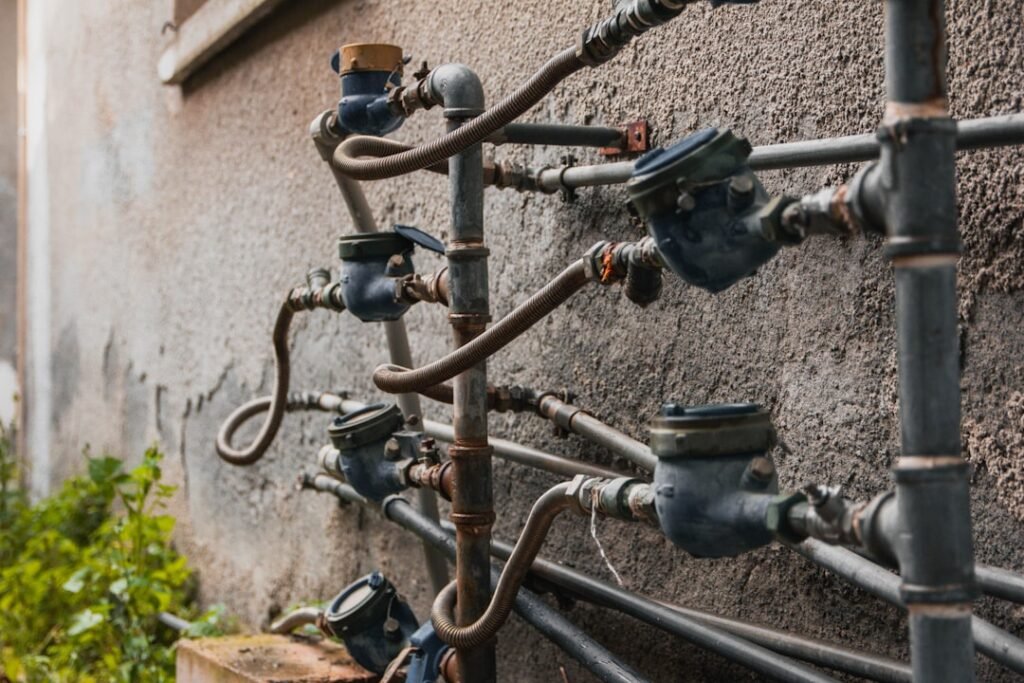
There are certain sounds in an old Connecticut house that stop you cold. The drip of a faucet at 2 a.m. is one of them. But the one that got my attention last spring was the slow, steady trickle of water seeping through the rim joist in my basement — right below the backyard hose bib I’d been meaning to replace for two seasons. Two seasons of “I’ll get to it.” Two seasons of freezing and thawing. And now I was looking at a wet basement wall and a hose bib that had clearly let water infiltrate the wall cavity all winter long.
I’ve written before about how to track down and fix a leaky basement in Connecticut, and I’ve also covered how to winterize your pipes before the cold hits. But replacing a hose bib is its own project — one that’s entirely doable on a Saturday morning and one that I tackled with my 15-year-old and my 12-year-old right there in the basement with me, wrenches in hand.
If you’ve got an outdoor faucet that drips, leaks at the wall, or took a beating from last winter, this guide is for you. Let’s do this right.
Why Exterior Hose Bibs Fail in Connecticut
Connecticut’s climate is genuinely hard on outdoor plumbing. We get hard freezes — sometimes before Thanksgiving, sometimes lingering well into March — and that freeze-thaw cycle is brutal on any fitting that holds water. A standard hose bib that isn’t a “frost-free” model can crack internally if it isn’t fully drained each fall. Even frost-free models fail over time if they’re installed at the wrong pitch, if a hose is left attached during winter (which prevents the internal valve from draining), or if the stem washer simply wears out after years of use.
The most common failure points are:
- A cracked brass body — caused by water freezing inside the spout or the wall cavity
- A worn stem washer or packing — causing the faucet to drip from the spout or leak around the handle
- A failing solder joint or threaded connection at the pipe inside the wall
- Water infiltration at the wall escutcheon — where the faucet meets siding or masonry
The fix for most of these is the same: replace the entire hose bib. Parts are cheap, the job is manageable, and doing it yourself saves you the $150–$300 a plumber charges for what is genuinely a one-hour job.
What You’ll Need
Before you start, gather everything. Running back to the hardware store mid-project with the water shut off is not how you want to spend a Saturday — ask me how I know.
- Frost-free sillcock / hose bib — match the stem length to your wall thickness (typically 8″, 10″, or 12″ for insulated Connecticut walls). Buy a quarter-turn ball valve style if possible; they’re more reliable than the old compression stem types.
- Two pipe wrenches or channel-lock pliers — you need one to hold the supply pipe steady and one to turn the fitting
- Teflon tape (PTFE tape) — for threaded connections
- Propane torch and lead-free solder — if your existing connection is soldered copper
- SharkBite push-to-connect fittings — a great alternative if you’re not comfortable soldering (I’ll explain both methods)
- Pipe cutter or hacksaw
- Silicone caulk — exterior grade, to seal around the escutcheon after installation
- Screwdriver and drill — for removing and securing the escutcheon plate
- Bucket and rags — there will be residual water in the pipe
Total material cost for a standard replacement runs $30–$65 depending on whether you need to buy a torch kit or choose to use SharkBite fittings (which cost a bit more but save time and don’t require soldering).
Step 1 — Shut Off the Water Supply
Find the shutoff valve that controls the hose bib. In most Connecticut homes, there’s a dedicated shutoff valve in the basement on the pipe that runs to the exterior faucet. Turn it clockwise until it stops. If there’s no dedicated valve and you have to shut off the main, do that — then consider adding an inline shutoff while you have the pipe open. That’s exactly what I did, and it made winterizing that line far easier going forward.
Once the water is off, open the hose bib outside to release pressure and drain any remaining water. Have your bucket and rags ready inside before you disconnect anything.
Step 2 — Remove the Old Hose Bib
Go outside and remove the escutcheon plate screws. Some older hose bibs have no separate plate — the flange is cast into the body itself. Either way, you’re looking for what’s securing the faucet to the siding or foundation. Remove any screws and set them aside.
Now go back inside to the basement. This is where having a helper is worth its weight in gold — I had my 15-year-old hold a flashlight and steady the supply pipe while I worked. Use one wrench or pliers to grip the supply pipe (or the fitting soldered to it) firmly, and use the second wrench to turn the hose bib body counterclockwise. Old connections can be very stubborn. Apply steady, firm pressure — not jerky force that could damage the supply pipe.
If the hose bib is soldered in, you’ll need to cut the pipe. Use a pipe cutter for a clean, square cut about 1–2 inches back from the elbow or fitting. Leave yourself enough pipe to work with. Once it’s cut, the old hose bib should pull out from outside with a slight twist and pull.
Step 3 — Prepare the New Connection
This is the step where people hesitate, and I get it — if you’ve never worked with copper pipe before, soldering feels intimidating. But you have two solid options here.
Option A — Threaded connection (simplest): If your existing supply line has a threaded female fitting, simply wrap the threaded male end of your new frost-free sillcock with three wraps of Teflon tape, clockwise around the threads, and thread it in by hand first, then snug it down with a wrench. Use a backup wrench on the fitting — not on the pipe itself — to avoid stressing the connection.
Option B — SharkBite push-to-connect (no soldering required): If you cut a copper pipe and don’t want to solder, a SharkBite elbow fitting that transitions to a threaded outlet is your friend. Deburr the cut end of the copper pipe with the reamer on your pipe cutter, push the SharkBite fitting on firmly until it seats, and you’re done on that end. Thread the hose bib in with Teflon tape as described above. SharkBite fittings are approved for in-wall use by most building codes and are genuinely reliable when installed correctly on clean, properly deburred pipe.
Option C — Solder (most durable, requires skill): If you’re comfortable with a torch, clean the pipe end with emery cloth, apply flux, heat the joint evenly, and feed lead-free solder into the joint until it flows around the fitting completely. Let it cool fully before moving on. My 15-year-old watched this step closely — it’s a skill worth knowing, and the EPA recommends lead-free solder for all potable water connections, which is what you should always use.
Step 4 — Position and Secure the New Hose Bib
Feed the new frost-free sillcock through the wall from outside. The key detail here that most people miss: the sillcock must pitch slightly downward toward the outside — about 1/4 inch of drop from inside to outside. This allows the internal valve (which closes at the back of the stem, inside your heated space) to drain completely when you shut the faucet off. If it’s level or pitching inward, water will sit in the stem and freeze. Get this right and you won’t be doing this job again for a long time.
Once positioned, connect the interior end to your supply line (threaded, SharkBite, or soldered as described in Step 3), then go back outside and screw the escutcheon plate to the siding or foundation. Pre-drill if you’re going into vinyl or wood siding to avoid cracking.
Step 5 — Seal the Escutcheon
This is a small step that makes a big difference. Apply a bead of exterior-grade silicone caulk around the perimeter of the escutcheon plate where it meets the siding or foundation wall. This keeps wind, water, and insects out of the wall cavity around the pipe. Tool it smooth with a wet finger and wipe away the excess. If you’ve already read my guide on how to caulk like a pro, the technique is exactly the same — slow, steady bead, smooth finish.
Step 6 — Test the Installation
With everything connected and the escutcheon sealed, go back inside and slowly open the shutoff valve. Watch the connection point carefully for any drips or weeping. A small drip at a threaded connection usually means you need one more wrap of Teflon tape or a slightly firmer turn with the wrench — shut it back off and adjust. A drip at a SharkBite fitting usually means the pipe wasn’t fully seated or wasn’t properly deburred — disconnect and redo it.
Once the inside connection is dry, go outside and open the hose bib handle. Water should flow freely. Close it. No drips from the spout after 30 seconds means you’re good. That satisfying silence after a test like that — there’s something quietly grateful about that moment. We said a quick thank-you right there in the basement, the three of us, before I even put the wrenches away.
One Critical Reminder for Every Fall
A frost-free hose bib only works if you disconnect your garden hose every fall before the first freeze. I cannot stress this enough. If a hose is left attached, water cannot drain from the stem, the self-draining feature is defeated, and the pipe can still freeze and crack — even with a frost-free model installed. Every October without fail, we make it part of our fall shutdown routine right alongside cleaning the gutters and checking the weatherstripping. My 10-year-old actually reminded me last year before I had a chance to mention it. That’s the whole point.
When to Call a Pro Instead
This is a DIY-friendly job for most homeowners, but there are times to pick up the phone instead of the wrench:
- If you find significant rot or mold in the wall cavity around the old hose bib
- If the supply pipe is galvanized steel (common in older Connecticut homes) and the fittings are seized or corroded beyond what reasonable force can loosen
- If you discover the pipe has cracked inside the wall and you can’t access the damage point without opening up the wall
- If you have any doubt about whether your local building code requires a permit for this work — a quick call to your town’s building department takes five minutes and can save a headache later
Most of the time, though, this is exactly the kind of job a careful homeowner can handle with basic tools and a clear morning. The money you save is real. The lesson your kids get from watching you problem-solve, measure twice, and do it right — that’s the part that stays with them. My 12-year-old asked me on the way back upstairs if we could replace the one on the front of the house too. I told him we’d do that one in the fall. He’s already looking forward to it.
One last thing — if you’re building up your home repair skills and tool collection to tackle jobs like this with confidence, check out my guide on building a DIY starter tool kit from scratch. Having the right tools in hand before you start makes every project cleaner, faster, and a whole lot less frustrating. God gives us the wisdom to learn — and the hands to put that learning to work.
