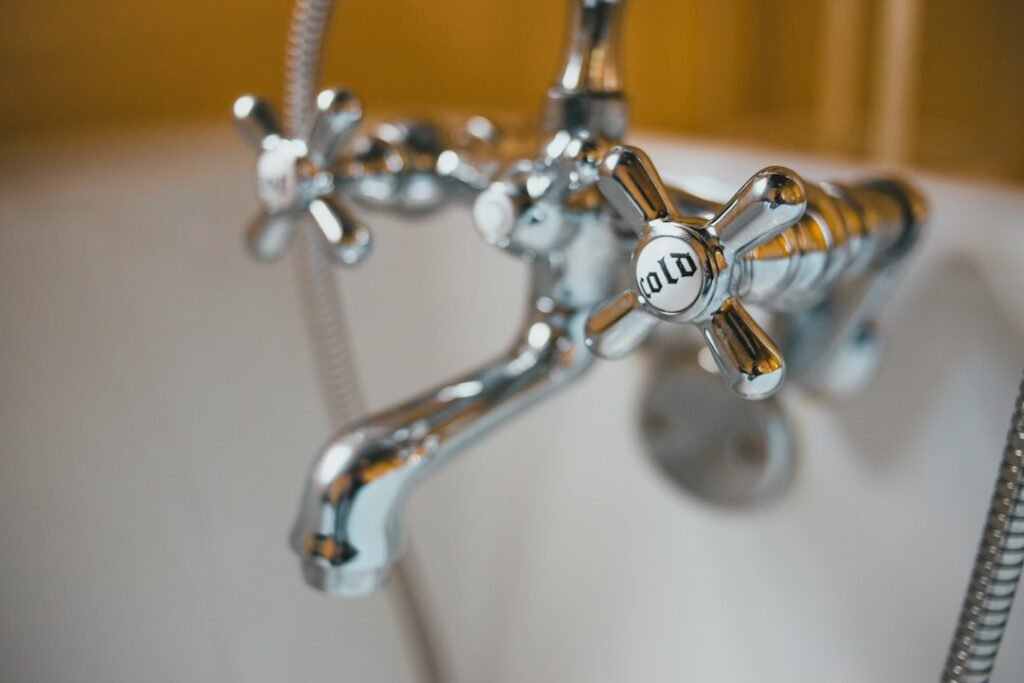
There are few things that chip away at a homeowner’s patience quite like a bathroom faucet that wobbles, drips, or just plain looks terrible. Maybe the finish is flaking off. Maybe the handles are stiff and corroded. Maybe it’s been slowly seeping water around the base for months and you keep putting a towel down there and telling yourself you’ll deal with it later. I know that feeling well.
Last spring, the faucet in our main bathroom finally reached the end of its useful life. It was original to the house — which, if you know Connecticut housing stock, means it was probably installed sometime around when my 15-year-old was in diapers, or possibly when I was. The finish was gone, the handles were loose, and one of them had developed that slow, maddening drip that doesn’t stop no matter how hard you crank it. I pulled out my 12-year-old as my Saturday morning helper, picked up a decent mid-range faucet from the hardware store, and we had the whole thing done before lunch.
Here’s the truth: replacing a bathroom faucet is one of the most satisfying DIY jobs you can tackle. It’s visible every single day. It makes the whole bathroom look better. And once you’ve done it, you’ll never pay a plumber $200 to do it for you again.
What This Job Actually Involves
Before we get into tools and steps, let’s be clear about what we’re doing here. This guide covers replacing a standard single-hole or three-hole bathroom vanity faucet — the kind that sits on top of the sink deck and connects to your home’s hot and cold supply lines underneath. We’re not touching the drain trap or the main shutoff valves, though we will be working near them.
This is a project most homeowners can handle in one to two hours with basic tools. The hardest part, honestly, is working in the tight space under the sink cabinet. If you’ve ever replaced toilet tank components or repaired a dripping faucet, you already know what it’s like to work in an awkward crouch with limited visibility. Same energy here — just prepare mentally and bring a headlamp.
Tools and Supplies You’ll Need
- Basin wrench — This is the one specialty tool that makes this job possible. It has a long handle and a pivoting jaw designed specifically for reaching up behind the sink to loosen the mounting nuts. Don’t try to do this job without one.
- Adjustable wrench — For the supply line connections and compression fittings.
- Plumber’s putty or silicone caulk — Depends on the faucet manufacturer’s recommendation. Check the instructions that come with your new faucet.
- Bucket and old towels — Water will come out when you disconnect the supply lines. Always.
- Flashlight or headlamp — Essential for seeing what you’re doing under the cabinet.
- New faucet with supply lines included — Many faucets come with braided stainless supply lines already attached. This makes the job easier. If yours doesn’t, buy flexible braided lines separately.
- Teflon tape (plumber’s tape) — For sealing threaded connections.
- Putty knife or scraper — To clean up old plumber’s putty or caulk residue from the sink deck.
- Penetrating lubricant (like PB Blaster) — For older, corroded supply line nuts that refuse to budge.
Before you buy a faucet, measure your sink. Count the holes and measure the spread between them. Three-hole sinks are typically either 4-inch center-set or 8-inch widespread. Single-hole sinks need a single-hole faucet or a cover plate. Getting this wrong means a return trip to the hardware store, and nobody wants that.
Step 1 — Shut Off the Water Supply
Look under the sink for the two shutoff valves — one for hot, one for cold — on the supply lines coming out of the wall or floor. Turn them clockwise until they stop. Then turn on the faucet handles to release any remaining pressure in the lines and let the water drain out. If your shutoff valves are stuck, stiff, or leaking around the stem, stop and address those first. A seized shutoff valve is a separate problem, but an important one to fix before you go any further.
This is also a good moment to involve a younger helper. My 12-year-old’s job was to hold the bucket and hand me tools. My 6-year-old stood at a safe distance and watched with great interest. There’s something I love about showing my boys that the systems in our home are understandable and fixable — that when something goes wrong, we don’t panic, we problem-solve.
Step 2 — Disconnect the Supply Lines
Place your bucket under the supply line connections at the faucet inlets. Using your adjustable wrench, loosen the nuts connecting the supply lines to the faucet. Expect a small amount of water to drip out — that’s normal. Have your towel ready.
If the nuts won’t budge, apply some penetrating lubricant and give it five minutes to work. Older Connecticut homes often have supply lines that haven’t been touched in decades, and corrosion is real. Be patient. Force can crack a fitting and turn a simple swap into a bigger plumbing problem.
Once the supply lines are disconnected at the top, you can leave them hanging from the shutoff valves for now, or disconnect them there too if you’re replacing the lines entirely — which I recommend if they’re old braided metal or the plastic compression type. New flexible braided stainless lines cost just a few dollars and are worth installing fresh.
Step 3 — Remove the Old Faucet
This is where the basin wrench earns its keep. Reach up behind the sink and locate the mounting nut or nuts that hold the faucet body to the sink deck. These are typically large plastic or metal nuts threaded onto the faucet shank. Use the basin wrench to turn them counterclockwise until they release.
On a three-hole faucet, there will be a nut under the center spout and sometimes washers or plates holding the handles. On a single-hole faucet, there’s typically one central mounting nut. Work carefully — it’s cramped under there, and the basin wrench can slip.
Once the mounting nuts are off, lift the old faucet out from above. You’ll likely see a ring of old plumber’s putty or dried silicone around the base. Use your putty knife to scrape this off cleanly. Then wipe down the sink surface so you’re starting fresh. A clean surface means a better seal and a better-looking finished product.
Step 4 — Prepare and Install the New Faucet
Read the instructions that came with your new faucet. I know that sounds obvious, but every faucet is a little different, and manufacturers specify whether they want you to use plumber’s putty, silicone, or just a rubber gasket for the base seal. Use what they recommend — it affects the integrity of the seal and sometimes the warranty.
If using plumber’s putty, roll a rope of it between your palms and press it around the underside of the faucet base before lowering it into position. If using silicone, apply a thin bead around the underside of the base. If the faucet comes with a rubber or foam gasket, no additional sealer is typically needed.
Lower the faucet into the holes from above, making sure everything lines up. Then go back under the sink and hand-tighten the mounting nut or nuts. Once hand-tight, use the basin wrench to snug them down — firm but not overtightened. Over-tightening can crack a porcelain sink or damage the faucet body. Snug and secure is the goal, not as tight as humanly possible.
Check from above that the faucet is centered and the spout is pointing straight. Make any adjustments now, before things are fully locked down.
Step 5 — Connect the Supply Lines
If your new faucet came with supply lines pre-attached, connect the free ends to the shutoff valves. Hot goes to hot (usually the left valve), cold to cold (right). Hand-tighten the nuts, then give them a quarter to half turn with the adjustable wrench. Wrap the threads with Teflon tape first if the connection is threaded rather than compression-style — this helps create a watertight seal.
If you’re using separate supply lines, connect one end to the faucet inlets and the other to the shutoff valves the same way. Double-check all connections before you turn the water back on. It only takes a moment and can save you a mess.
For more on keeping your home’s plumbing in good shape through Connecticut winters, check out my earlier guide on winterizing your pipes and preventing frozen plumbing.
Step 6 — Turn On the Water and Test
Slowly turn the shutoff valves back counterclockwise to restore water flow. Watch the supply line connections carefully as the pressure builds. Any drip at a connection means it needs another quarter turn. Don’t force it — just snug it down a little more.
Once the water is fully on, turn on the faucet handles. Let the water run for a minute. Check for leaks at the base of the faucet where it meets the sink, at the supply line connections below, and around the handles. Everything should be dry. If you see a drip at the base, the mounting nut may need to be slightly tighter, or the putty/silicone seal may need to be reapplied.
Finally, remove the aerator from the faucet tip (it usually unscrews by hand or with pliers) and let the water run for 30 seconds to flush out any debris from the new lines. Then reinstall the aerator. You’re done.
What Can Go Wrong — and When to Call a Pro
Most bathroom faucet replacements go smoothly. But there are a few situations where you should pause and consider calling a licensed plumber:
- Shutoff valves that are seized, corroded, or actively leaking — If the valve under your sink won’t close fully or leaks around the stem when you operate it, it needs to be replaced. That’s a job that typically requires shutting off the main water supply, and depending on your home’s setup, may require a pro.
- Corroded or damaged supply stub-outs — If the pipe coming out of the wall or floor is corroded, galvanized, or shows signs of damage, get a plumber’s eyes on it before proceeding.
- Water damage under the cabinet — If you open the cabinet and find soft wood, mold, or signs of long-term water exposure, address that first. A new faucet on a rotting cabinet floor is just dressing up a bigger problem.
The EPA’s WaterSense program is worth a look when you’re choosing a new faucet — WaterSense-labeled faucets use at least 20% less water without sacrificing performance, which adds up on a Connecticut water bill over time.
The Bigger Picture
When my 12-year-old and I finished that faucet replacement, we stood back and looked at it together. New chrome, no drip, no wobble — just clean and solid. He said, “Dad, that actually looks really good.” And it did. Not because it was fancy, but because we did it ourselves and did it right.
That’s what these Saturday morning projects are really about in our house. Yes, we saved money. But we also built something between us — confidence, competence, and the understanding that most things in a home are fixable if you’re willing to learn how. I believe God gave us minds and hands for a reason, and I want my boys to grow up knowing how to use both.
A bathroom faucet is a small thing. But small victories build the habits that carry you through the bigger ones. Take the morning. Do the job. You’ll be glad you did.
—

Pingback: How to Replace a Kitchen Sink Sprayer Yourself — A Connecticut Dad’s Complete Guide to Fixing That Weak, Leaky Side Sprayer Without Calling a Plumber - cthomerepairandtutoring.com